

The joyful power of music in our Memory Support Groups
Music is one of life’s most beautiful gifts. It lifts our spirits, stirs our memories, and brings people together across every culture and language – and nowhere is that more evident than in our Memory Support Groups (MSG).
A Program Designed with Purpose
Designed carefully by our experienced care team, our Memory Support Groups provide meaningful, engaging experiences for clients living with dementia or other cognitive impairments. The program is available to our Commonwealth Home Support Program (CHSP), Support at Home (SAH), and Private Care clients across Brisbane at our Social Activities Centres; Casa Serena, Casa Aurelia, and Amici House – on a weekly basis.
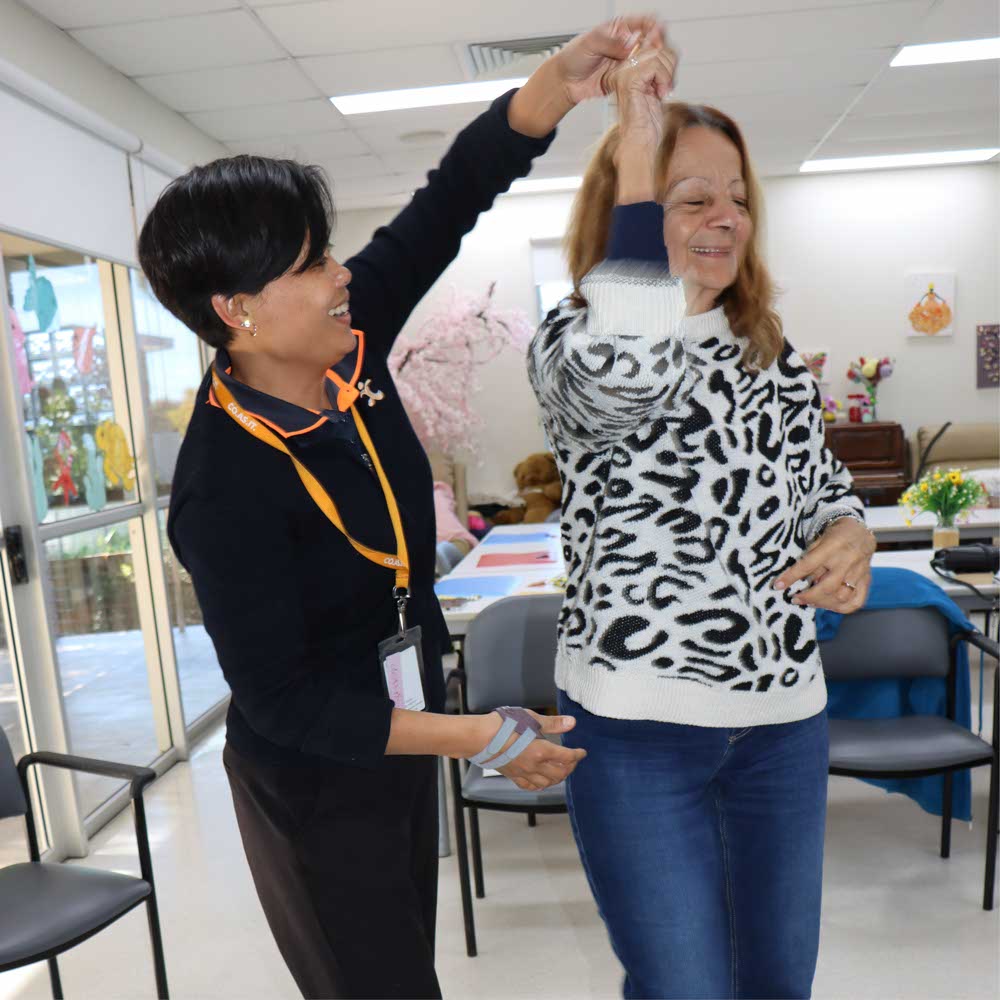
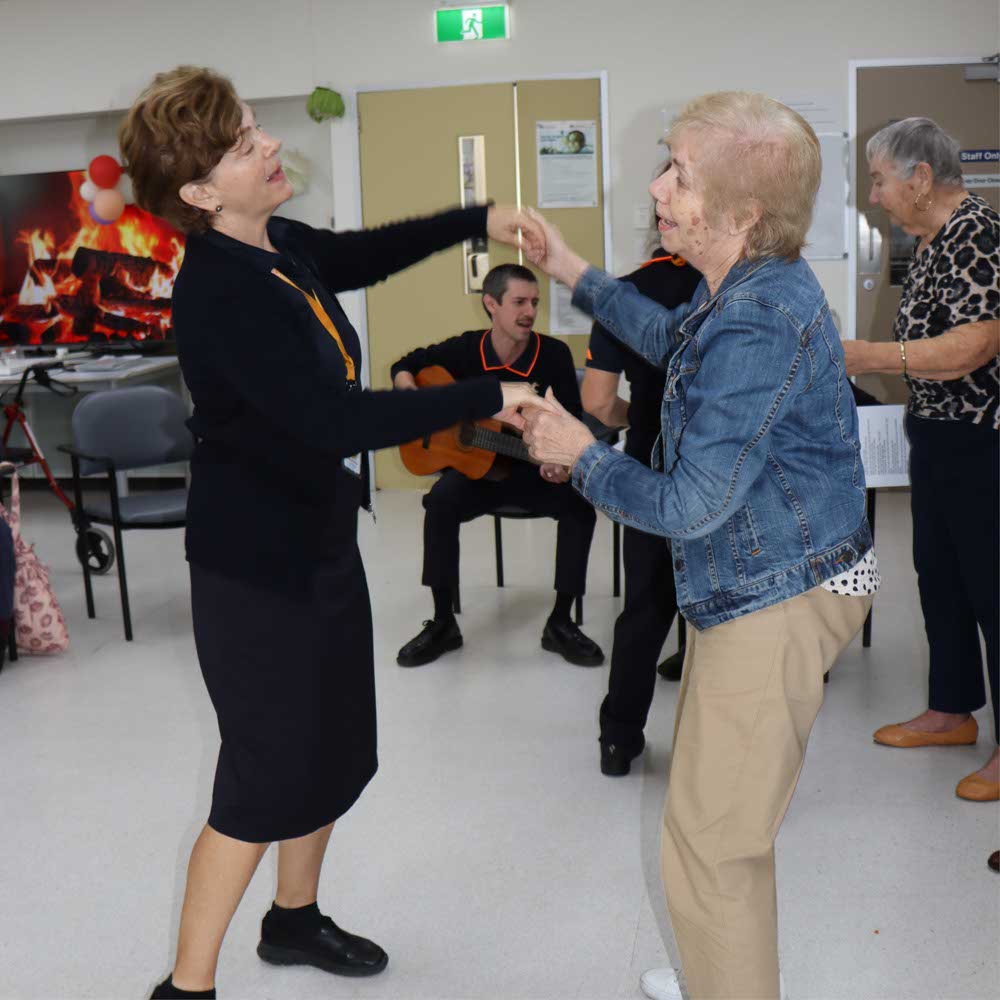
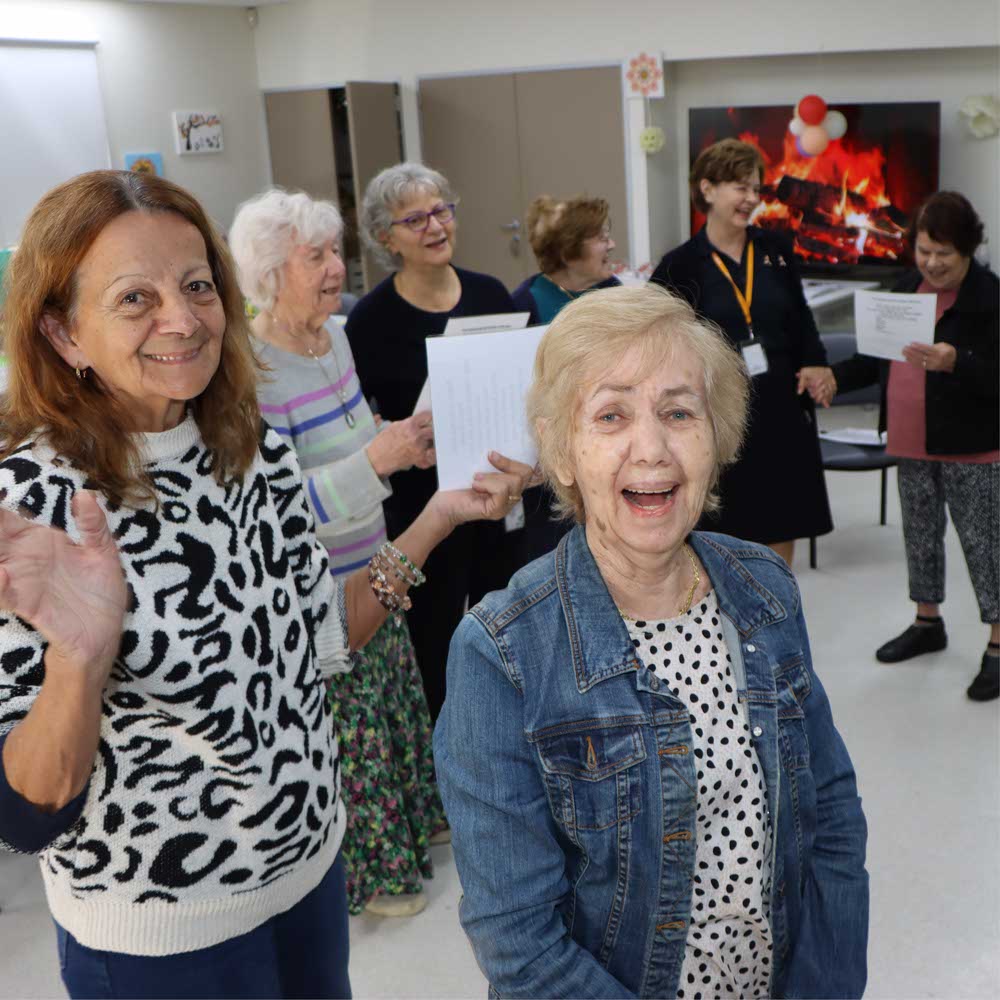
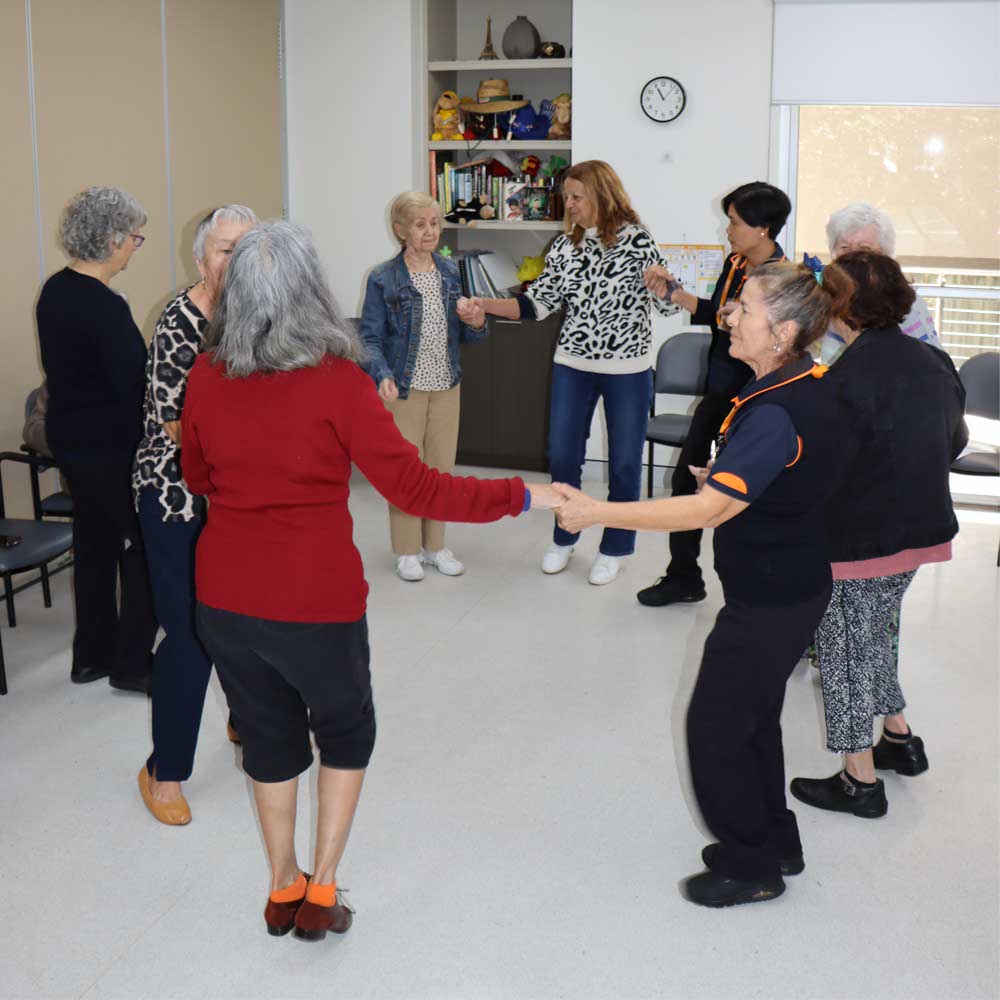
Music plays a central role in our MSG program. Sessions include music therapy, chair exercises, games, and crafts – with some of our own staff picking up the guitar to lead the group in song. Songs are chosen specifically to stimulate memory, drawing on tunes that are familiar and meaningful to our clients. We even print out lyrics so everyone can feel comfortable and included while singing along.
Why Music Matters
According to the Australian Music Therapy Association (AMTA), music has been shown to offer remarkable benefits for health and wellbeing. You don’t even need to be musically inclined to experience these benefits – simply listening, singing along, or moving to a rhythm can make a real difference to how you feel.
Music can support memory, cognitive function, and brain health; reduce feelings of stress, anxiety, and depression; ease social isolation while fostering connection; improve balance, mobility, and coordination through movement and dance; and help with communication and emotional expression (ATMA, 2026).
The benefits are backed by research
A 2025 Monash University study of over 10,800 older adults found that always listening to music was associated with a 39 per cent decreased risk of dementia, while playing an instrument was associated with a 35 per cent reduction in risk.
The study also found higher scores in overall cognition and episodic (long-term) memory among those who regularly engaged with music, suggesting that music could be an accessible way to help maintain cognitive health in later life (Monash University, 2025).
Music’s benefits extend beyond prevention
Research from the University of Sydney’s Sydney Dementia Network has explored how musical participation, such as learning piano or singing in a choir, may help slow cognitive decline.
Their work has also highlighted how personalised music can reach people even in the later stages of dementia: familiar, meaningful songs can activate strong responses in the brain even when other areas are affected, often sparking recognition, calm, and connection in ways that surprise families and carers alike (University of Sydney, 2024).
This aligns with what’s been found at a neurological level too. According to the Max Planck Institute for Human Cognitive and Brain Sciences, working alongside the University of Amsterdam and INSERM Caen, long-term musical memory in people with Alzheimer’s disease often remains intact and functional for a surprisingly long time, with the brain region responsible for this type of memory remaining largely preserved despite progressive degeneration elsewhere (Max Planck Institute for Human Cognitive and Brain Sciences, 2015).
For people with dementia, music also offers a vital outlet for self-expression. Many who find speaking difficult can still sing along to familiar lyrics, or participate through clapping, tapping, or matching a rhythmic motion to a steady beat – improving social interaction.
Active techniques like group singing, instrument playing, and rhythmic movement can also help safeguard cognitive domains such as executive function, verbal memory, and attention.
The Difference It Makes
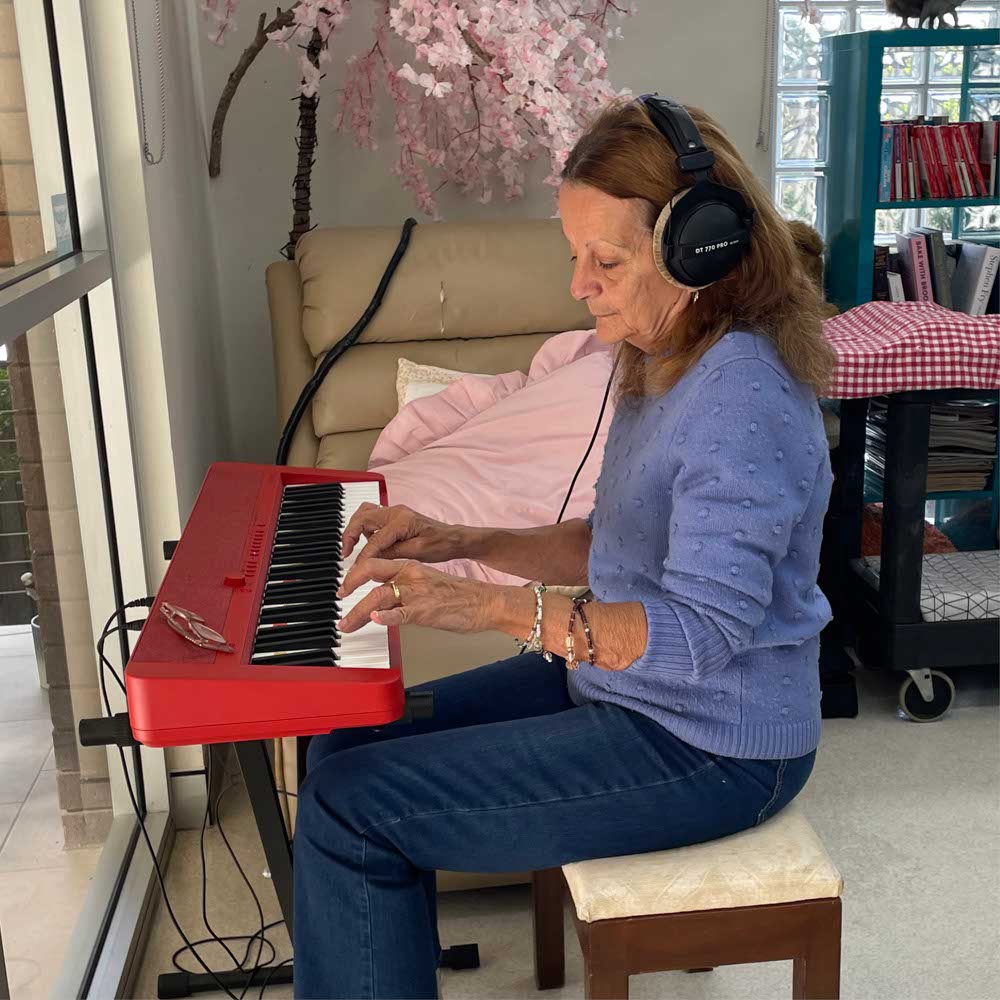
For our clients, some may dabble on the piano keys and play a tune, but singing and dancing together are consistently among the most loved parts of MSG – and it shows.
Our clients have developed meaningful connections with our staff, reflected in their engagement, participation, and expressions of comfort and trust.
For carers, the MSG program offers something equally valuable: much-needed respite, knowing their loved one is enjoying a program that brings them genuine happiness.
Celebrating Music, Every Day
This World Music Day, we’re celebrating the smiles, the memories, the benefits and the connections that music brings to our community – not just today, but every day through programs like Memory Support Group.
Interested in our Memory Support Groups?
If you’d like to learn more about how you can attend our Memory Support Group activities, visit our Care and Support Services page, call us on 07 3624 6100 or submit an enquiry and one our team members will be in touch.
Eligibility criteria applies.
Sources/References
- Australian Music Therapy Association (AMTA). https://www.austmta.org.au/
- Monash University, “Music can stave off dementia by up to 40 per cent, Monash study finds” (November 2025), published in the International Journal of Geriatric Psychiatry. https://www.monash.edu/medicine/news/latest/2025-articles/music-can-stave-off-dementia-by-up-to-40-per-cent,-monash-study-finds
- University of Sydney, Sydney Ideas – “Music on your mind,” Sydney Dementia Network.
https://www.sydney.edu.au/engage/events-sponsorships/sydney-ideas/2024/music-and-dementia.html - Max Planck Institute for Human Cognitive and Brain Sciences – “Alzheimer’s: Long-term Musical Memory” (18 June 2015). https://www.mpg.de/9281090/alzheimers-long-term-musical-memory